
 Living legacy vaults
Family legacy, easier to revisit
A family can ask about consented, recorded moments and receive answers rooted in real experiences — clearly labelled when the archive has no answer.
Yovaan AI
Yovaan AI transforms a person's own conversations — with their consent — into a Digital Being: their voice, their traits, their way of speaking. Able to speak when they no longer can.
Working software PoC · Research preview
Pictures and videos help us remember how a person appeared. But the story of the individual — their expressions, their advice, their way of talking to the people they loved — is something no file format holds on to.
Photographs and videos capture what someone looked like. None of that data captures how they thought, joked, or what they knew best.
One person jokes with a sibling, mentors a student, and speaks formally at work. Those distinctions deserve to be preserved — not averaged into a generic profile.
Formal interviews are valuable, but informal conversation — with permission — carries the phrases, stories, and rhythms people actually use.
Without a way to organize and revisit them, family stories, wisdom, and sayings become harder and harder to pass on.
Our long-term vision is to convert consented conversations into a digitized, interactive version of a person — software first, with a wearable as a future design direction. A Digital Being that belongs to the person it represents, governed by their consent.
A Digital Being is trained and recorded only with the person's explicit permission — revocable, auditable, and deletable at any time.
Everyone speaks differently to family, friends, and colleagues. Personas stay separated per relationship, never averaged into one generic voice.
Responses are grounded in recorded moments with source references — and the system abstains honestly when the archive has no answer.
Fidelity grows in validated stages, from text sketch to voice-true presence. We measure what can be represented faithfully — never promise a full replica blindly.
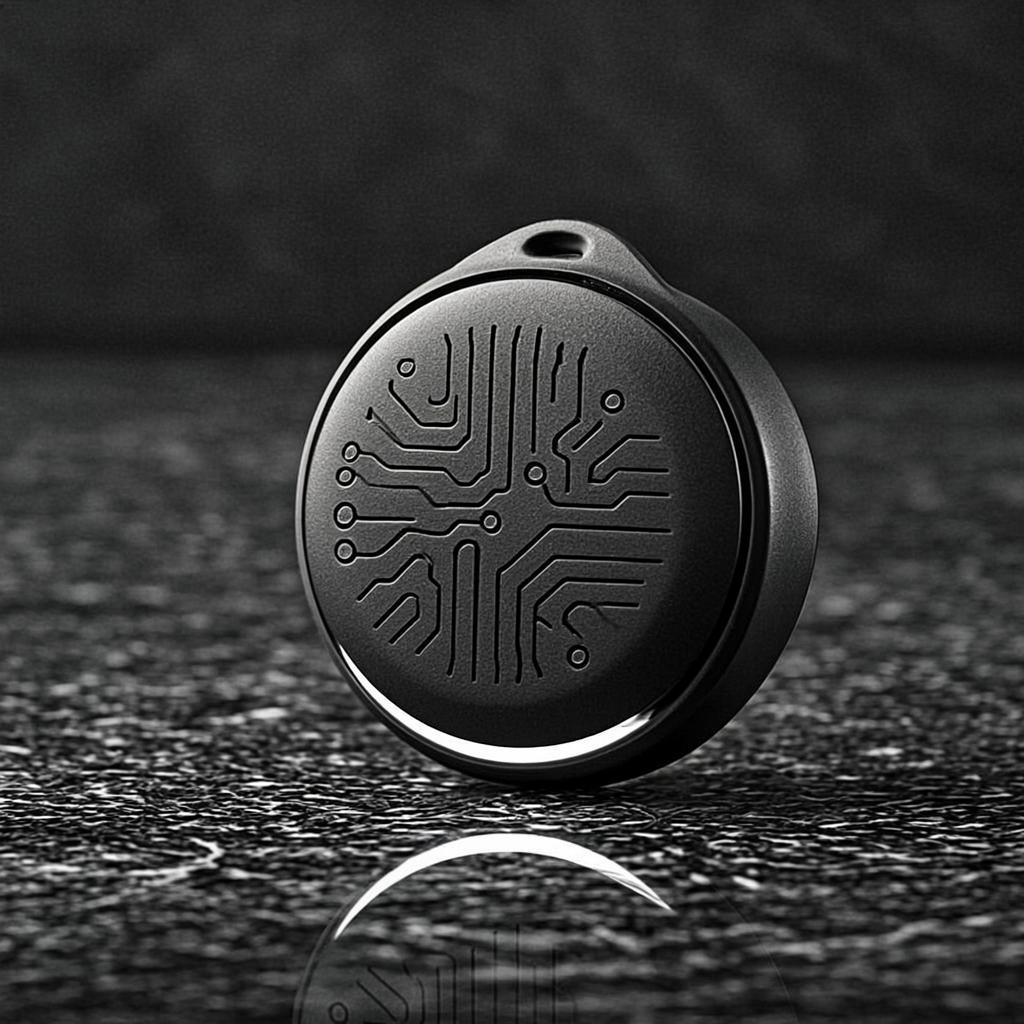
Coin-sized wearable · Design direction
Software first. Hardware only when the evidence supports it.
We explore a staged model that makes evidence coverage visible. More recording time does not automatically mean more fidelity — every stage is evaluated against held-out conversations.
Text chat with basic vocabulary and facts. Recognizably them on paper.
Their slang and catchphrases appear. Relationships stay separated.
Tone and cadence emerge. Grounded recall of shared moments, with sources.
Voice synthesis approaches their real voice. Near-exact manner of speaking.
Long-term goal: measure what can be represented faithfully at each stage — rather than promise a "full replica."
Different interfaces, same underlying data. Every application below depends on the same foundation: consent, evidence, and honest disclosure.
Living legacy vaultsA family can ask about consented, recorded moments and receive answers rooted in real experiences — clearly labelled when the archive has no answer.
 Elder care · With clinicians
A known, consented archive could support reminiscence and connection for elders. Clinical applications would always be designed with specialists.
 Knowledge transfer
A future research path: organize a person's explanations, mentoring style, and craft so the next generation can keep learning from them.
 Creators · OTT · Rights-first
Under the rights-holder's approval, authors could explore interactive works with sanctioned characters and scripts — a new canvas for storytelling.
How impactful can it be
One system, one source of truth: the person's own words. Every interface — chat, voice, or a future wearable — draws from the same consented, evidence-grounded memory.
Pipeline: raw audio becomes speaker-labelled transcripts, persona profiles, a searchable memory index, evidence-grounded responses, and finally an interactive Digital Being.
A Digital Being is only trustworthy if the person it represents is in control. These principles are structural, not features.
The system does not do voice cloning today. It always identifies itself as AI, abstains when uncertain, and never impersonates without consent.
From all speakers, before anything is recorded, processed, or learned.
User-level isolation, encrypted at rest and in transit.
Every action tracked. The person can always see what happened and why.
Consent is understandable, specific, easy to withdraw — and deletion is real.
